Emotional and Behavioral Disorder (EBD)
For teachers in mainstream and special education settings, managing the symptoms of emotional and behavioral disorder (EBD) in the classroom presents numerous challenges. The persistent pattern of extreme behaviors, such as anger, aggression, sadness, and anxiety, exhibited by children with this condition is not only debilitating for the child, but disruptive for their fellow classmates, amplifying the pressures placed on educators. By making the appropriate accommodations for emotional and behavioral disorders and providing pupils with an isolated sensory environment in which to regulate their emotions, schools can help students with EBD to develop strategies to control their behavior while minimizing the impact on other children.
What Is Emotional and Behavioral Disorder?
Emotional and behavioral disorder is an educational classification that refers to multiple conditions that provoke inappropriate behaviors and emotions in children and adolescents, which severely impact their ability to forge relationships and engage in their education. A wide range of conditions are recognized as types of emotional and behavioral disorder, from ADHD and OCD to anxiety disorders and mood disorders, such as bipolar disorder. While there is no universally accepted definition for EBD, the Individual with Disabilities Education Act (IDEA) states that any child who persistently displays at least one of the following characteristics may have the condition:
- An inability to learn that cannot be explained by intellectual, sensory, or health factors.
- An inability to build or maintain satisfactory interpersonal relationships with peers and teachers.
- Inappropriate types of behavior or feelings under normal circumstances.
- A general pervasive mood of unhappiness or depression.
- A tendency to develop physical symptoms or fears associated with personal or school problems.
Accommodations for Emotional and Behavioral Disorder
While EBD is primarily associated with children, without effective intervention during childhood, emotional and behavioral disorders in adults may persist into later life, restricting individuals’ capacity to engage fully in adult society. For this reason, consistent engagement with multisensory environments is essential to the management of EBD, supporting individuals to regulate their emotions and behaviors. The inclusion of calming sensory products within your space provides children with consistent focal points, their controlled sensory output helping them regain composure.
The transitioning colors and trickling murmur of our bubble tubes provide gentle visual and auditory stimulation, while the malleable threads of the fiber optics can be twisted or draped across the user, creating opportunities for tactile exploration. For students with hyperactivity who benefit from physical outlets for emotional release, soft play equipment allows them to self-regulate through gross motor stimulation while providing the reassurance of a cushioned environment in case they lose motor control.
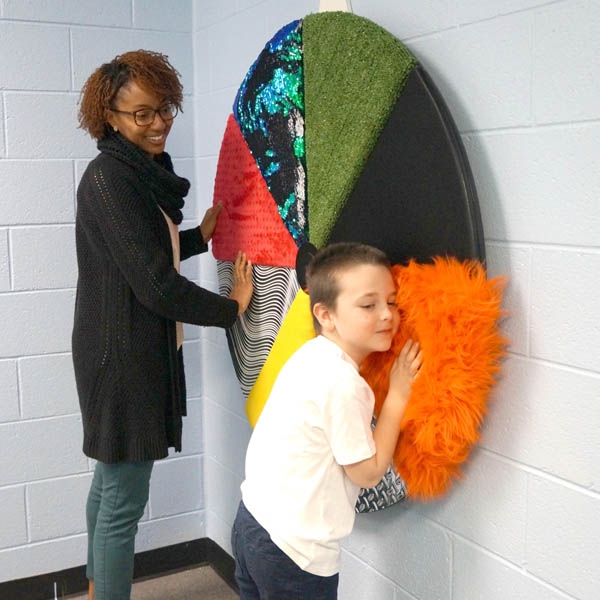
Facilitating positive interactions with other students while establishing clear rules and providing consistent supervision are vital to developing communication skills in children with emotional and behavioral disorders. Large installations, such as our interactive wall panels and sensory mirrors, allow students to engage in shared sensory experiences without compromising their ability to nurture their own emotional well-being.
We appreciate that many institutions support students with various learning difficulties besides EBD, and you may be concerned about accommodating for emotional and behavioral disorders while addressing the sensory needs of your other students. At Experia USA, we offer free room design assistance to every client to ensure they maximize the potential of their space. Speak with one of our expert sensory advisors today by calling us toll-free at 1-800-882-4045 or send us an email to outline the needs of your space.