Visual Impairment
Visual impairment refers to any significant loss of eyesight that cannot be fully corrected with glasses, contact lenses, or surgery. Conditions such as blindness, cataracts, glaucoma, amblyopia, and diabetic retinopathy can greatly limit independence, hindering an individual’s ability to navigate the world around them while creating barriers to communication. For children in particular, visual impairments can pose challenges to their sensory development, motor skills, and emotional well-being, making it more difficult to progress in education and form social bonds.
In the absence of their sight, stimulating the remaining senses through products designed for visual impairment is essential in providing children and students with enriched sensory experiences, while encouraging them to engage more confidently in education and everyday activities alongside their fully sighted peers. Working closely with occupational therapists, Experia USA has developed numerous visual impairment products to support development and enhance quality of life through meaningful sensory exploration.
How Do Visual Impairment Devices Support Users?
For individuals with partial sight, visual impairment devices can make their surroundings easier to interpret by enhancing contrast through color and light, while incorporating interactive elements to support recognition. By combining sensory stimulation with effective room design, these multisensory environments encourage users to process information through multiple senses at once, improving their understanding of space.
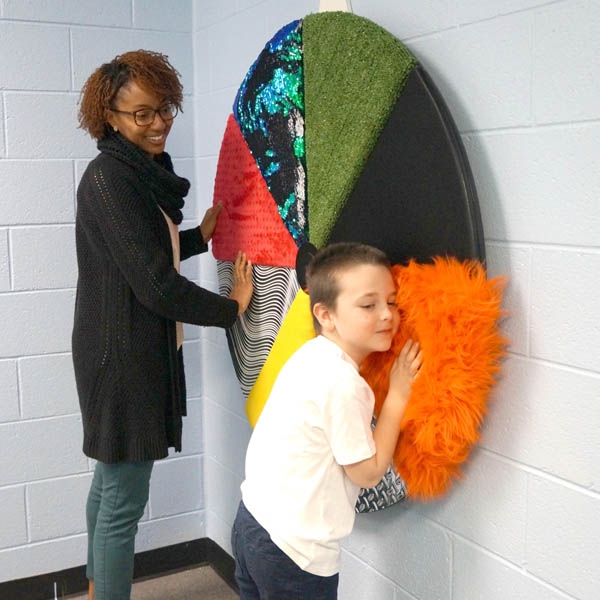
Within schools and special educational settings, sensory equipment can enable visually impaired students to participate more confidently in classroom activities. Illuminated and tactile resources can promote reading skills, letter recognition, and object identification, while interactive products empower students to explore educational materials in a practical way, providing alternative avenues for learning that are better suited to their individual needs.
Supporting independent movement and spatial awareness is another important function of products designed for visual impairment. Through the strategic placement of tactile textures and lighting effects, users can develop a stronger understanding of the spaces around them and become more confident exploring unfamiliar environments.
Assistive Technologies for Visual Impairments
For schools to accommodate for visual impairments, it is crucial to design spaces that incorporate various stimuli such that students with different levels of vision are able to engage in ways that suit their individual needs. Rather than relying on a single approach, these environments must be thoughtfully structured to offer layered sensory input, such that students can explore them through sight, touch, sound, and movement.
Installing sensory lighting alongside vibrant soft play features can enhance spatial clarity for students with partial vision, empowering them to explore and develop their physical movement with greater confidence. The soft spectrum of lights produced by our bubble tubes similarly provides an engaging focal point for users with lower vision, while gentle vibrations and bubbling streams combine tactile interaction and subtle auditory feedback, creating an immersive sensory experience for blind users.
Aside from promoting spatial awareness, elements such as aromatherapy and ambient soundscapes play an important role in regulating mood and supporting emotional well-being. Calming scents can help create a soothing atmosphere that reduces overstimulation, while carefully curated audio features such as nature sounds and music can promote relaxation.
We appreciate that designing spaces for visual impairment can be difficult, particularly when your students have diverse sensory needs and additional differences that require thoughtful support. At Experia USA, we are committed to helping schools create inclusive sensory environments, which is why we offer free room design services with the purchase of our visual impairment products. Discuss your design ideas with our expert sensory advisors today by calling us at 1-800-882-4045 or send us an email with more information about your requirements.